Orca (Killer Whale)
Orcinus orca
The largest member of the dolphin family, with hunting cultures that are passed down from one generation to the next.
Photo: Callan Carpenter / CC BY-SA 4.0
3 things to know
- The orca is actually the largest dolphin, not a whale in the everyday sense.
- Different groups specialize in different prey and even have their own dialects of calls.
- Female orcas are one of very few animals that go through menopause.
- Scientific name
- Orcinus orca
- Depth
- 0 m – 1,000 m
0 – 3,281 ft - Size
- Up to about 9 m (30 ft) long (males)
- Weight
- Up to about 6,000 kg (13,000 lb)
- Lifespan
- Females can pass 80 years
- Diet
- Fish, seals, sharks, other whales (varies by group)
- Where
- Every ocean, from the poles to the tropics
- IUCN status
- Data Deficient
- Depth zones
- Sunlight · Twilight
Orcas live in every ocean, but not all orcas are alike. Scientists recognize several distinct types, or ecotypes, that look slightly different, eat different prey and rarely mix.
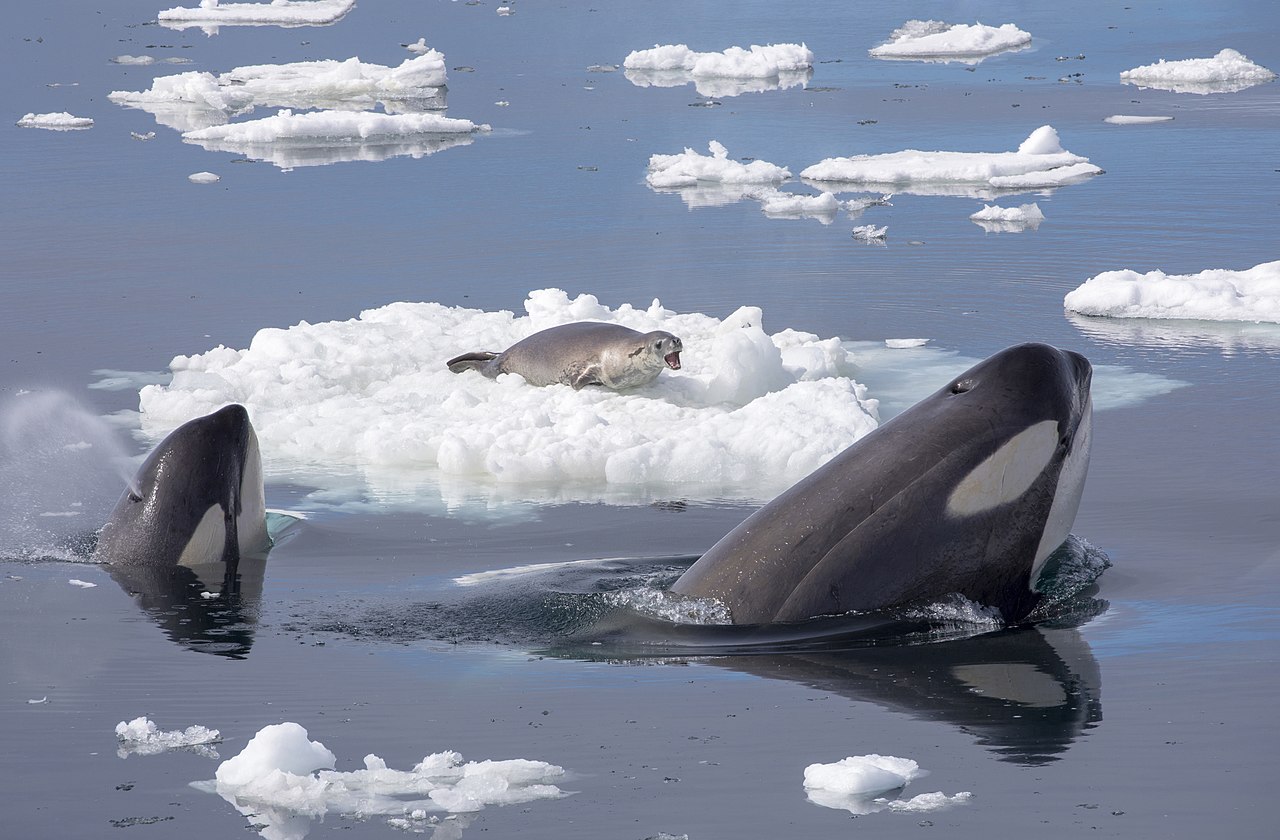
Some groups eat almost nothing but fish, such as salmon. Others hunt seals, sea lions, dolphins and even large whales. In Antarctica, some orcas work together to make waves that wash seals off floating ice.
These skills are learned. Young orcas pick up hunting methods and calls from older members of their family, which is why scientists describe orcas as having culture.
Families are led by older females. After they stop breeding, these grandmothers keep guiding the group, often leading it to food when it is scarce. Because the different types of orca are so distinct, the IUCN lists the species as a whole as Data Deficient, while some local populations are known to be in serious trouble.


